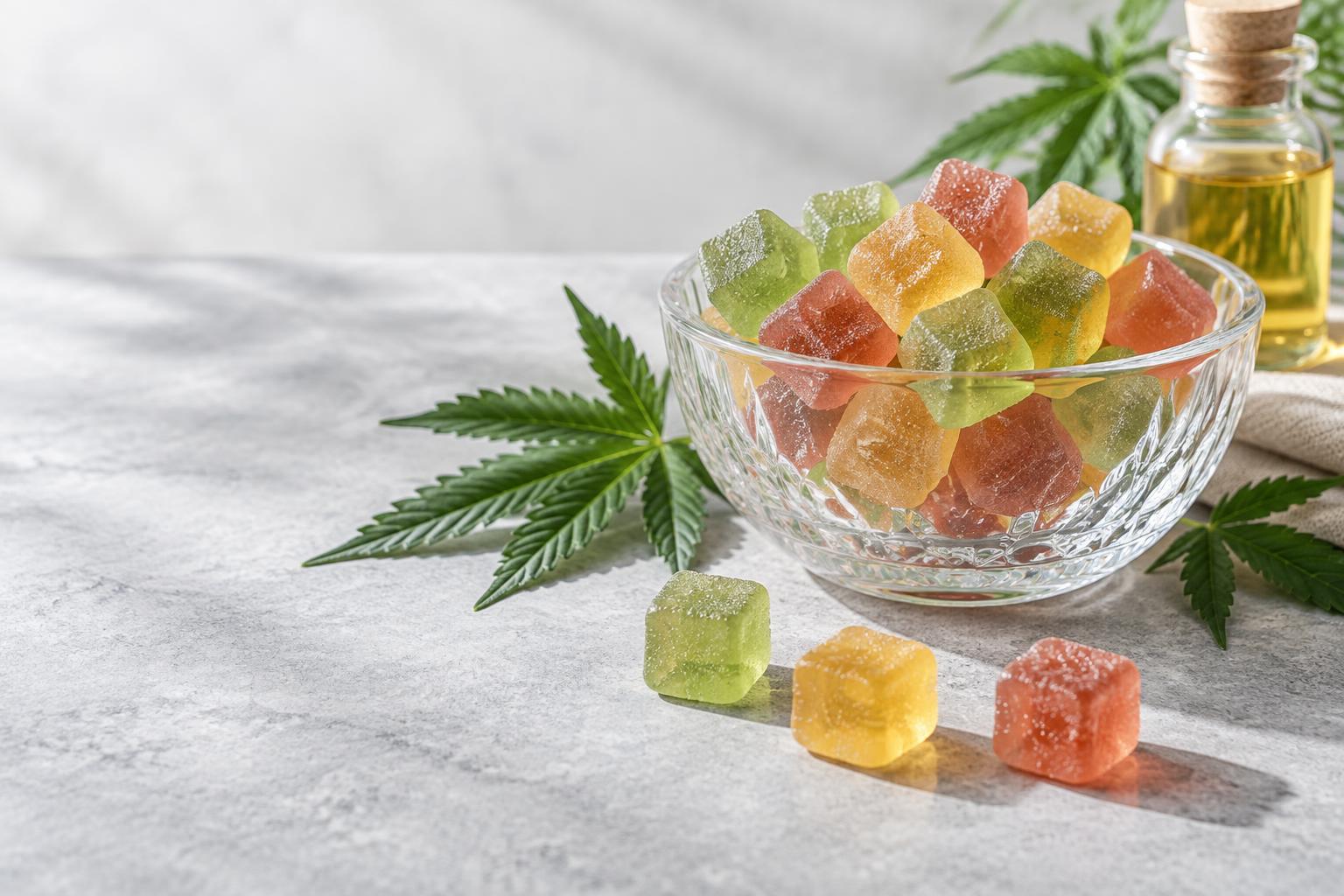
What are Shark Tank CBD Gummies?
“Shark Tank CBD Gummies” is a search phrase, not proof that a particular product appeared on television. People often encounter it in advertisements, product reviews, and promotional pages that connect CBD sweets with familiar entrepreneurs. Before interpreting the name as an endorsement, separate three questions: what the product contains, who actually sells it, and whether the claimed television connection has independent evidence. These are different issues, and an appealing package cannot answer any of them.
CBD stands for cannabidiol, a compound found in the cannabis plant. Gummies are one format used to sell products containing this compound. They may also contain sugar, flavorings, coloring, gelatin or pectin, and other ingredients. Their appearance can resemble ordinary candy, but that does not make their contents suitable for everyone. This guide is an independent consumer overview, not a product review based on laboratory testing. We have not verified the linked retailer’s formulation, manufacturing standards, or product performance.
The Shark Tank connection: check the evidence
Do not assume a Shark Tank connection simply because an advertisement includes the program’s name, a television screenshot, or a recognizable investor. The Federal Trade Commission has warned consumers about fake Shark Tank celebrity endorsements. Snopes has also investigated misleading CBD gummy promotions using the show’s identity. An advertisement can be convincing while still making a claim that the person shown never authorized. Logos and photographs are not substitutes for a verified episode, an official statement, or reliable reporting.
When a seller claims that investors funded its gummies, look for the exact company name, episode information, and a primary source that confirms the transaction. Be particularly cautious about dramatic stories describing unanimous investment, secret formulas, or a product that television networks supposedly tried to suppress. This website does not claim that any linked gummies appeared on Shark Tank. It has no affiliation with ABC, the program, or its investors. The phrase is used here to address the question readers are searching for, not to establish a celebrity partnership.
CBD, THC, and what a gummy label means
CBD and THC are different cannabinoids. THC is primarily associated with cannabis intoxication; CBD is not the same compound. However, a gummy promoted as a CBD product may contain other cannabinoids, and labeling alone cannot establish what is present. Terms such as “full spectrum,” “broad spectrum,” and “isolate” describe intended extract types, but their use does not independently verify the contents of a specific bottle. A current, batch-matched laboratory report is more informative than a marketing phrase.
A number printed prominently on a package can describe the amount in the whole container rather than in one gummy. Check the serving size, number of servings, and the stated cannabidiol amount per serving before comparing products. Also examine whether the number refers to CBD specifically or merely to hemp extract. Those measurements are not interchangeable. If the explanation is unclear, ask the seller for clarification rather than guessing. A transparent label should help you understand what is being offered without requiring you to interpret a promotional headline.
What the research does—and does not—show
Research on cannabidiol should not be confused with evidence for every consumer gummy. Studies may use a specific prescription formulation, a controlled amount, carefully selected participants, and medical monitoring. Those conditions are very different from buying a sweet online. The FDA has approved a prescription CBD medication, Epidiolex, for certain seizure disorders. That approval does not extend to retail CBD gummies, and it does not establish that gummies treat anxiety, sleeplessness, chronic pain, or other medical conditions.
The National Center for Complementary and Integrative Health explains that evidence varies by condition and that important uncertainties remain. A personal testimonial is not a clinical trial, and an ingredient’s popularity is not evidence of effectiveness. Avoid sellers promising guaranteed relief, rapid weight loss, a cure, or a replacement for prescribed treatment. If you are considering CBD because of an ongoing symptom, discuss the symptom with a qualified healthcare professional first. Identifying its cause is more useful than relying on an unverified promise about a product.
Safety considerations before you buy
CBD is not automatically risk-free because it comes from a plant. The FDA identifies concerns including liver injury, interactions with medicines, and side effects such as changes in alertness or gastrointestinal symptoms. The risks can depend on the individual, the amount consumed, other substances used, and the actual composition of the product. Combining CBD with alcohol or other substances that cause drowsiness can increase concern. A label describing a product as “natural” does not address those possibilities.
Ask a healthcare professional before using CBD, particularly if you take prescription medicines, have a medical condition, or are pregnant or breastfeeding. Do not give these products to children without appropriate medical guidance. Keep gummies in their original packaging, securely stored away from children and pets, because their candy-like appearance can invite accidental ingestion. Do not stop a prescribed medicine to try a gummy. This article cannot assess your personal health history, and it does not provide a recommended dose or an individualized treatment plan.
Read the complete ingredient list
The extract is only one part of a gummy. Review sweeteners, flavorings, colors, preservatives, and the ingredient used to create the texture. Gelatin and pectin are not interchangeable for consumers with dietary preferences. Some products include additional botanicals or ingredients marketed for sleep or relaxation; those additions deserve their own safety review. Check declared allergens and any cross-contact information if allergies are relevant to you. Do not assume a product is vegan, sugar-free, or free of common allergens because its advertising looks wellness-focused.
The linked retailer’s product details can change, so this page does not reproduce an unverified ingredient panel or claim a specific potency. Read the current package information and compare it with the listing before ordering. If the two disagree, seek an explanation from the seller. Statements such as “premium hemp” and “clean ingredients” are broad descriptions, not precise manufacturing information. More useful details include a complete ingredient list, clear serving information, identifiable business contact details, and documents connected to the actual batch being sold.
How to evaluate a laboratory report
A certificate of analysis, often called a COA, is a laboratory report for a tested sample. Look for a batch or lot number that matches the product, the date of testing, the laboratory’s identity, and the measurements reported. A generic document reused across multiple products may not describe the bottle you receive. Check cannabinoid results, including CBD and THC, and whether the report includes relevant contaminant testing such as pesticides, heavy metals, residual solvents, and microorganisms. Not every report covers every category.
Laboratory testing is a useful transparency step, not a guarantee that a product will help you or that every bottle is identical. A report should be legible and traceable rather than just a “lab tested” badge. If a seller does not provide a document, or the document lacks the information needed to connect it to the product, treat the missing evidence as a limitation. Contact the laboratory through independently verified details if authenticity is uncertain. Do not mistake a laboratory report for FDA approval or medical endorsement.
A practical checklist for buying online
Before entering payment details, verify the seller’s identity, support contact, shipping terms, and return conditions. Read the actual checkout screen rather than relying on a banner announcing a discount. Confirm the quantity, total cost, delivery charges, taxes where applicable, and whether your purchase enrolls you in recurring shipments. A “trial” can carry continuing charges if the terms authorize them. Save the order confirmation and the terms you accepted so you can refer to them if a problem develops.
This site includes four links to MediBloom, the destination requested for this guide. They open an external retailer, not a checkout operated by this website. We have not independently tested its gummies or verified its prices, inventory, discounts, refund performance, or shipping coverage. Visiting the seller is an opportunity to examine its current information, not a recommendation that a purchase is appropriate for you. Avoid making a decision under pressure from countdown timers, claims of disappearing stock, or a celebrity photograph. Take time to compare evidence and terms.
Considering a purchase?
Review the retailer’s current ingredients, lab reports, and terms before you decide. We have not independently verified its products.
Visit MediBloom retailerCompare transparency, not just the headline price
A low bottle price may not represent a comparable product. Start with clear information about the amount of CBD per serving, the number of servings, and the complete purchase total. Only calculate a cost comparison when the quantities are actually stated and supported; do not treat an unspecified hemp-extract amount as a verified CBD amount. Consider whether the seller makes the batch report accessible before purchase. Missing information is itself relevant when deciding how confidently you can evaluate an offer.
Other factors include ingredient suitability, accessible customer support, straightforward cancellation terms, and how the seller describes evidence. Restrained, specific explanations are more useful than claims that a formula works for everyone. Be skeptical of review sections that provide no information about how reviews were collected or whether incentives were offered. A large star rating cannot verify product contents or a health outcome. The goal is not to identify the strongest marketing message; it is to find enough reliable information to make an informed decision, including the decision not to buy.
Check the rules where you live
CBD rules differ between countries and can vary within a country. The origin of an extract, its THC content, the product format, and the way it is marketed can affect its legal treatment. A seller accepting an address does not necessarily establish that a product can lawfully be shipped there. Check current guidance from your national and local authorities before ordering, especially for cross-border deliveries. An article written for a broad audience cannot confirm legality for every reader or every product.
In the United States, the FDA distinguishes approved medicines from other cannabis-derived products and explains restrictions on adding CBD to food or marketing it as a dietary supplement under federal law. State rules may differ, but a seller’s “legal hemp” statement does not resolve every regulatory question. Travel creates additional complications: permission to buy a product in one location does not guarantee permission to carry it somewhere else. Consult the relevant authorities rather than relying on an online retailer’s general reassurance.
Set realistic expectations and protect your information
There is no universal experience that every reader should expect from a CBD gummy. Composition, individual circumstances, and other medicines can all matter. This page therefore does not promise a time to onset, a particular feeling, or a health improvement. If a product causes an unexpected reaction, seek appropriate medical advice rather than taking more in an attempt to reproduce a testimonial. Serious symptoms require urgent care. Reporting concerns to a relevant consumer or health authority can also help identify wider product problems.
Protect your personal information while shopping. Use the seller’s genuine address, examine the checkout domain, and avoid sending payment or identity documents through unsolicited messages. HTTPS is important for connection security, but a padlock does not prove that a business is trustworthy. Review the privacy notice to understand how your information may be used. If an advertisement impersonates a celebrity or news organization, do not let that familiarity substitute for checking who receives your payment and what you are agreeing to purchase.
The bottom line on Shark Tank CBD Gummies
The most useful way to approach “Shark Tank CBD Gummies” is as a consumer research question. Verify any television claim, distinguish CBD from a vague hemp-extract description, read the full ingredient list, and request a batch-matched laboratory report. Look beyond the promotional headline to the seller’s identity and the complete checkout terms. None of those steps establishes a medical benefit, but together they can help you identify missing information and avoid relying on a misleading endorsement.
A careful decision can be to ask more questions, consult a healthcare professional, compare other options, or decide not to purchase. If you visit the linked retailer, check the current details there and do not interpret this guide as a certification of its products. Use the FDA, NCCIH, and FTC resources below for further reading. This is general educational information, not medical advice. Shark Tank and its associated names belong to their respective owners; this independent website does not represent them or suggest that they endorse CBD gummies.